

Design Hotels That Feel Like Cambodia
The useful question is not which hotel looks Cambodian. It is which one has Cambodian art, history or labor built into the business.
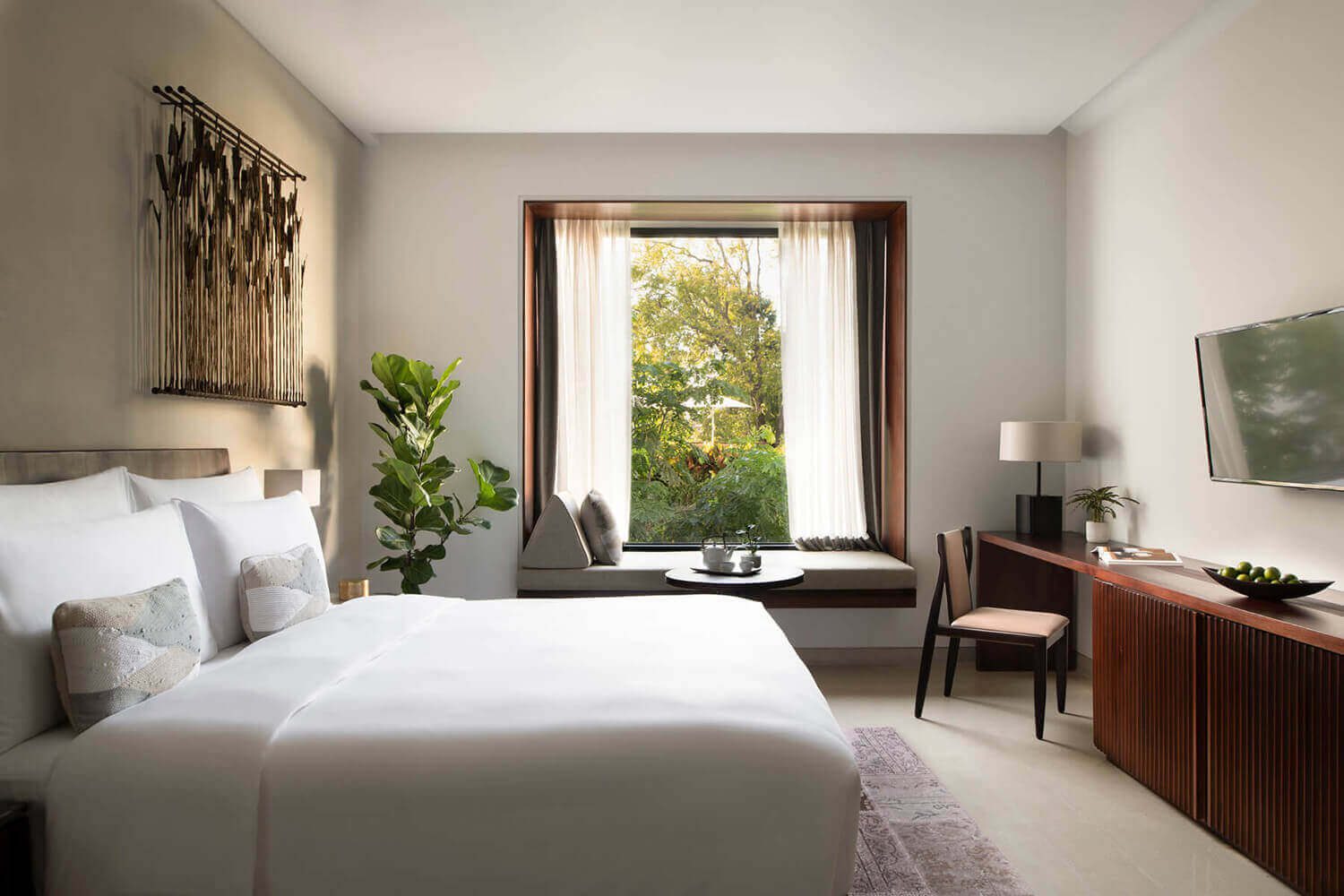
Most hotels near Angkor use the same shortcuts: dark wood, an elephant somewhere, a lotus at reception and enough regional decoration to look vaguely Southeast Asian. The result could be moved to Bali or Phuket with almost no change. The hotels below make stronger decisions. One buys and shows Cambodian art. One connects luxury revenue to a foundation. One preserves a building with a real history. One commissions local artisans to make the furniture. Those choices are more interesting than decoration because they affect where the money goes and what the guest actually learns about the place.
01. Decoration Is Easy. A Real Position Costs Money.
The difference appears in the art budget, the building, the ownership model or the supply chain.
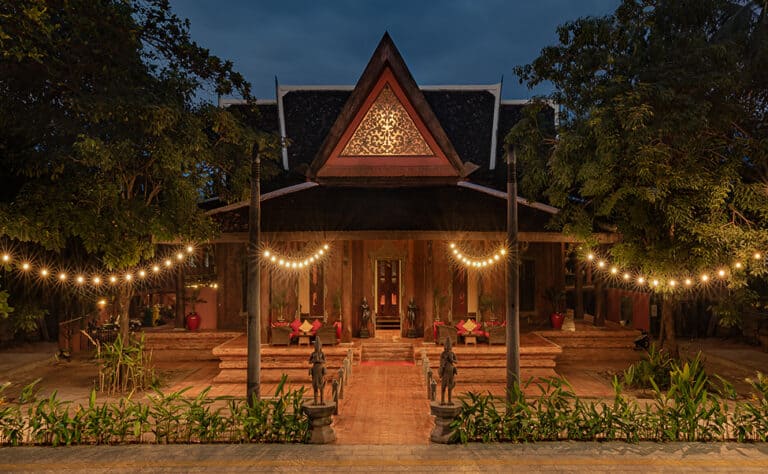
Every hotel around Angkor references Khmer design. The four worth studying go further. Treeline operates as a serious platform for Cambodian artists. Shinta Mani connects a famous designer and a luxury property to a long-running social mission. FCC Angkor preserves a real colonial building and its complicated history. Sala Siem Reap uses locally made furniture and materials. Each has made one structural decision that ties the property to Cambodia.
A motif can be bought. A relationship with local artists, institutions or makers has to be built.
That is the standard I am using here. Cambodian identity should not appear only in the final styling. It should affect who gets commissioned, which building is preserved, where revenue goes or who makes the things inside the room.
02. Treeline Built the Hotel Around Cambodian Art.
The art is not filler for the lobby. It is one of the main reasons the property exists.
Treeline Urban Resort is a privately owned 48-room hotel on the Siem Reap riverside. It opened in November 2018 and was founded by Cambodian architect Hok Kang, who runs HKA and Partners and co-founded Brown Coffee. This was his first hotel, and the project was designed as a platform for Khmer creativity rather than a generic luxury property with local references added later.
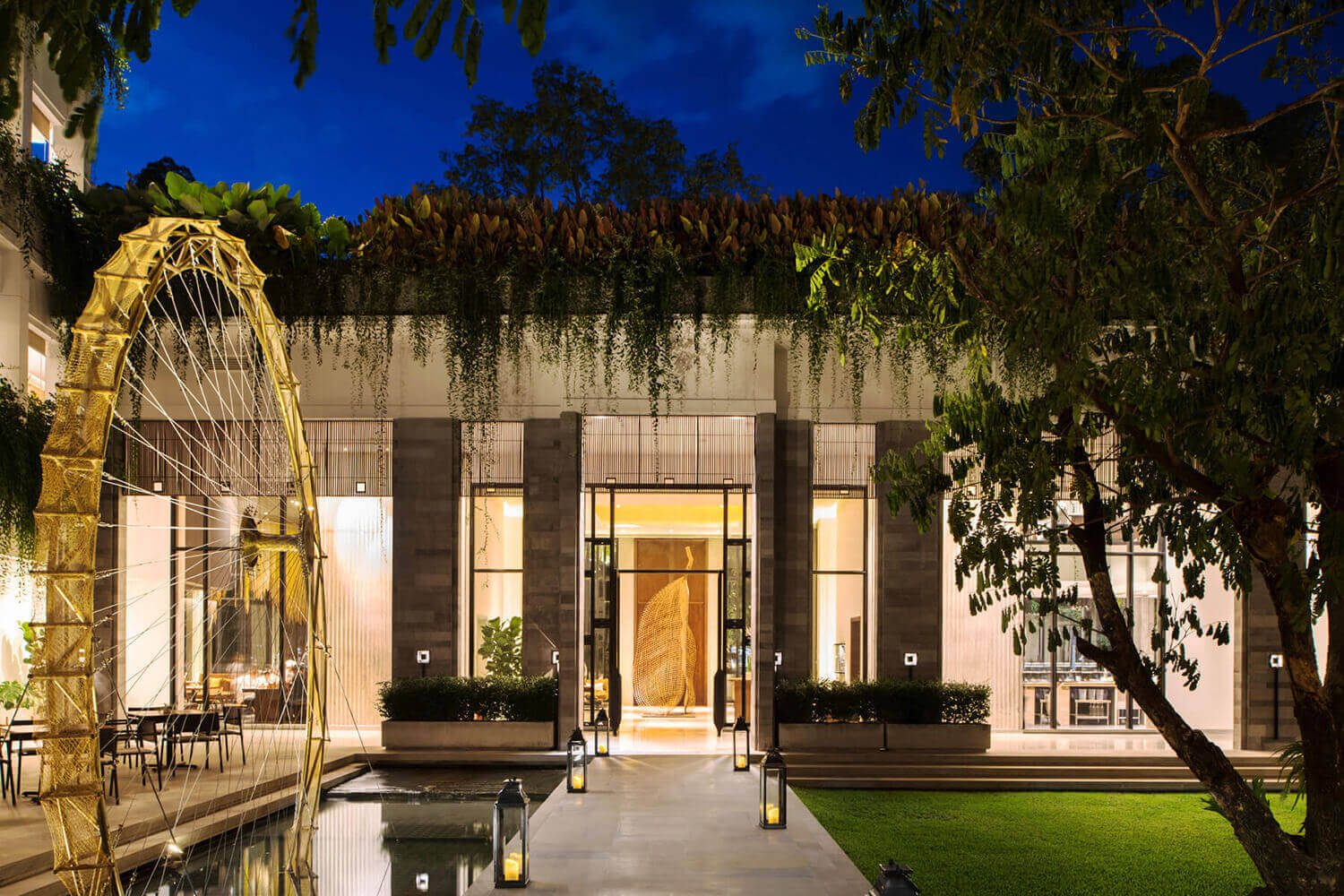
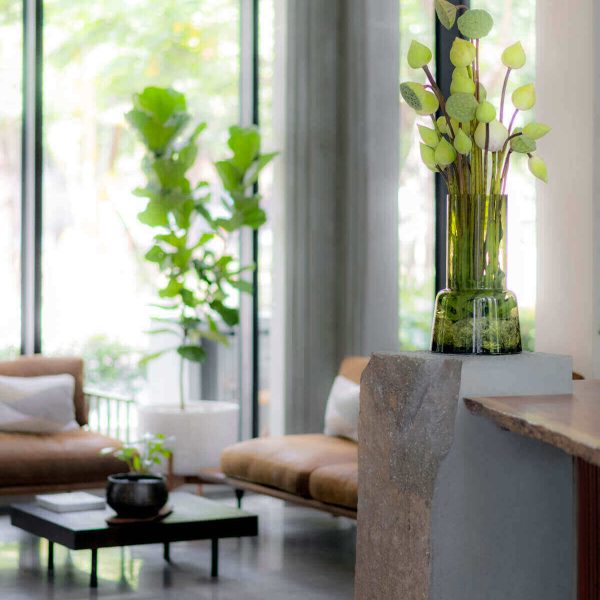
The hotel holds around 50 works by Cambodian artists, including Sopheap Pich and Thang Sothea. Pich's bamboo-and-wire seedpod occupies the lobby, and a large cosmic-wheel water feature designed by Hok Kang's firm defines the central courtyard. Treeline also runs rotating exhibitions, has supported emerging artists and has built programming around Vann Molyvann, Cambodia's most important modernist architect.
The commercial decision is clear. Treeline spends on Cambodian art, gives it prominent space and makes the collection part of the guest experience. A Cambodian architect is also acting as a patron. That is much more specific than hanging a few anonymous temple photographs in the corridor.
03. Shinta Mani Uses Design to Fund a Larger Mission.
Bill Bensley gets the attention. The foundation explains why the property matters.
Shinta Mani Angkor sits in the Royal District and is one of the most visually distinctive hotels in the city. Bill Bensley designed the interiors around strong geometry, recessed openings and forms drawn from Angkor. The result is controlled, theatrical and easy to recognize without turning the rooms into a theme park.


The more important part is the business history. Before it became a boutique hotel, Shinta Mani operated as a nonprofit hospitality school providing free training to disadvantaged Cambodians. That work developed into the Shinta Mani Foundation, which receives support from hotel revenue and funds community and environmental programs.
The Outsider Gallery makes the connection visible. Bensley sells prints and original work on site, and proceeds support the foundation and its partners. The designer is not only providing the look. His name and his art generate additional revenue for the mission behind the hotel.
At Shinta Mani, the design attracts the customer and helps fund the institution that came first.
Luxury philanthropy deserves scrutiny because the marketing can easily become larger than the impact. Shinta Mani is stronger than most because the training school predates the hotel, the foundation remains active and the commercial property is tied back to that origin.
04. FCC Angkor Preserves a Real Building and Its History.
The property does not need to manufacture heritage. It already has it.
FCC Angkor by Avani occupies a former French governor's mansion that later became the Siem Reap outpost of the Foreign Correspondents' Club. It later operated as a hotel and press club. That history is not a theme written by a branding agency. It is the biography of the site.
The current design keeps the colonial structure and layers tropical modernism onto it. Architect Gary Fell established much of that visual direction, and a later redesign led by Malee Whitcraft with Phnom Penh's Bloom Architecture was reported at about $7 million. The work produced roughly 80 rooms and suites, restored the Mansion restaurant and added Scribe bar as a direct reference to the press history.
FCC Angkor works because it does not clean the building into a neutral luxury object. The colonial period, the foreign press and the later redesign all remain visible. The property gives guests a way to stay inside a complicated piece of local history rather than inside a newly built imitation of one.
05. Sala Siem Reap Connects the Rooms to Local Makers.
The smallest design decision on this list may be the easiest for other hotels to copy.
Sala Siem Reap is less theatrical than the other properties and more direct about production. The hotel sits on Charles de Gaulle near the Royal Gardens and uses a mix of classical and modern Khmer art throughout the common spaces and rooms.
The detail that matters is the furniture. The pieces are custom-made by local artisans using local materials. That moves the design budget into Cambodian workshops instead of into a container of generic hotel furniture. The room does not only look local. A meaningful part of it was made locally.
Commissioning a Cambodian artisan to build the chair matters more than adding another Cambodian pattern to the wall.
This is the most repeatable model in the article. Siem Reap already has trained woodworkers, lacquerers, ceramicists and textile producers. Hotels create constant demand for furniture, lighting, tableware and soft goods. Buying those categories locally can turn a construction and renovation budget into a long-term customer for the city's makers.
06. Four Hotels, Four Useful Models.
The properties are different, but each makes one decision that goes beyond styling.
| Hotel | Designer or author | Storytelling mode | Signature move |
|---|---|---|---|
| Treeline Urban Resort | Hok Kang, HKA and Partners | Contemporary art patronage | ~50 works by Cambodian artists, incl. Sopheap Pich in the lobby |
| Shinta Mani Angkor | Bill Bensley | Design funding a social mission | Outsider Gallery sales feed the Shinta Mani Foundation |
| FCC Angkor by Avani | Gary Fell, lineage; Whitcraft and Bloom | Preserved colonial heritage | A real governor's mansion and press-club history, kept intact |
| Sala Siem Reap | Local artisans | Craft embedded in the build | Custom furniture made by local artisans from local materials |
Treeline uses art patronage. Shinta Mani links design and room revenue to a social foundation. FCC Angkor preserves a building with real historical weight. Sala uses local artisans inside the physical product. These are not interchangeable strategies, and that is why the comparison is useful.
The weaker hotel does none of this and compensates with more decoration. The stronger hotel chooses a relationship with artists, history, institutions or makers and lets that relationship guide the design. Guests may not know the operating model, but they can feel when the room has a reason to look the way it does.
Pick one real connection to the place and build the hotel around it. Regional decoration is not the same as design.
For anyone developing hospitality in Cambodia, the lesson is practical. Decide where the property will create local value: through commissions, training, restoration, ownership or procurement. Make that decision early enough to shape the budget and the building. Cambodian identity then becomes part of how the hotel operates, not a styling package applied at the end.
Sources
- Treeline Urban Resort, official site: privately owned 48-room design hotel, riverside, art focus.
- Wallpaper, Treeline Urban Resort opens in Siem Reap: Hok Kang, HKA and Partners, ~50 works, Sopheap Pich and Thang Sothea, cosmic-wheel courtyard.
- Urbanland Asia, Treeline exhibits new artwork: November 2018 opening, Brown Coffee co-founder, Treeline Gallery, arts foundation plans.
- Shinta Mani Angkor, official site: Royal District, Bensley design, foundation, Outsider Gallery.
- Shinta Mani, boutique hotel design in Cambodia: Bensley's Angkor-inspired columns and doorways, minimalist-yet-theatrical approach.
- BENSLEY, Shinta Mani Angkor project: designer credit and design intent.
- FCC Angkor by Avani, official site: Gary Fell tropical modernist aesthetic, French colonial history, jungle landscape.
- Wallpaper, FCC Angkor: governor's mansion and Foreign Correspondents' Club history, Whitcraft and Bloom redesign, ~$7 million, ~80 rooms, Scribe bar.
- Sala Siem Reap Hotel, official site: classical and modern Khmer art, custom furniture by local artisans using local materials.