

Where to Shop Made in Cambodia in Siem Reap
Do not choose a market first. Decide what you want to buy, then go to the place that can prove where it came from.
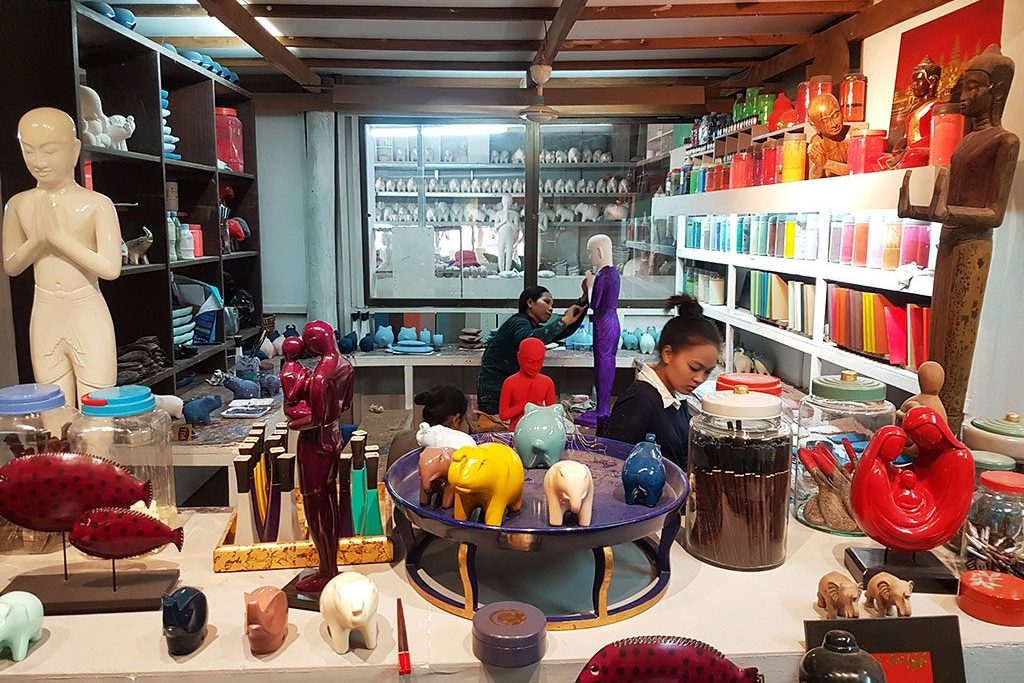
Most Siem Reap shopping guides compare markets. That is not useful. The real distinction is between products with a Cambodian maker and supply chain behind them and products imported in bulk because they are cheap enough to sell beside a temple.
I source products for a living and now live in Siem Reap. I shop the city the same way I evaluate a factory: who made it, where, from what, under whose name and who keeps the margin. That filter removes most of the noise quickly.
Choose the object first. The right shop becomes obvious after that.
01. Buy Something With an Origin.
A good store can tell you who made the product and where the work happened.
Anonymous souvenirs are easy to scale because nobody has to explain them. A better Cambodian product carries a maker, a material and a domestic supply chain. That does not automatically make it good, but it gives you something real to evaluate beyond the price tag.
Siem Reap is unusually good for this kind of shopping because the shelf and the workshop are often close together. You can discover a brand in a concept store and then visit the people making it a few kilometers away. Use the sections below as buying routes rather than a list of competing shops.
The name of the maker should be easier to find than the word Cambodia printed on the packaging.
02. Start at SATU for the Fastest Overview.
One room, more than 70 Cambodian brands and very little guesswork.
SATU is the quickest way to see what contemporary Cambodian brands are producing now. The riverside store sits between the Royal Residence and FCC Angkor by Avani and opened in March 2022. Its roster has grown from more than 60 brands to more than 70 across jewelry, candles, ceramics, perfume, pepper, textiles, books and homeware.
The store solves the first problem for a visitor: verification. The products have already passed a local-sourcing filter, and the labels are clearly presented. Use SATU as an index. Write down the brands you like, then visit their dedicated stores or workshops if you want to understand the production in more depth.
With limited time, this is the most efficient first stop in the city.
03. Use Made in Cambodia Market for a Curated Market Experience.
The vendor rule is simple: the products have to be made in Cambodia.
Made in Cambodia Market, which has moved from King's Road to near the Post Office on Oum Khun Street and runs afternoon and evening, is one of the few markets in Siem Reap where the format does not tell you much about the quality. Its useful feature is the screening. Vendors are selected around Cambodian production, and the stated mission is to create Khmer jobs from the workshop through to the person selling on the floor.
That rule changes the mix. You find Cambodian food makers, jewelers, textile producers and brands such as Sombai and SeungKhmer rather than rows of resellers carrying the same imported stock. The market operates into the evening, so it is a good after-dinner stop when the workshops and most concept stores are closed.
The best market curation is a rule the customer can understand.
The prices are not the main difference. The money simply stays closer to the person who made the product.
04. Buy at the Workshop When the Process Matters.
A workshop visit gives you the product, the maker and the production method in one place.
Siem Reap has an unusually strong group of working studios that welcome visitors and sell directly. These are active production sites, not retail spaces with a decorative loom in the corner. The visit is useful because you can see whether the story on the label matches the way the object is actually made.
The right workshop depends on what you want to take home.
| Place | What to bring home | How to find it |
|---|---|---|
| Senteurs d'Angkor | Scents, soaps, spices, candles, essential oils, palm-leaf boxes | Workshop and tropical garden in Siem Reap; guided tours of every station |
| Artisans Angkor | Silk scarves, lacquerware, stone and wood carving, silver | Main workshop near the Old Market on Stung Thmey Street; silk farm in Puok district |
| Khmer Ceramics & Fine Arts Centre | Wheel-thrown stoneware, glazed tableware, your own pot from a class | Ceramics centre on the road toward the temples; walk-in pottery classes |
| Sombai | Hand-painted bottles of infused rice spirit | Tasting house and workshop; sample the flavors before you buy |
| Theam's Gallery | Lacquered art objects, sculpture, contemporary Khmer pieces | Home, atelier and gallery of Lim Muy Theam, near the temples; open daily |
| Satcha | Incubated craft across many disciplines, contemporary Khmer design | Bamboo campus of workshops; free entry, watch artisans train |
Every place in the table above can identify the maker, the material and the production site. That is the standard worth paying for.
05. Go to Senteurs d'Angkor for Scent, Soap and Spices.
It has been building Cambodian-made personal care and gift products since 1999.
Senteurs d'Angkor was founded in 1999 by Stéphane Bourcier around Cambodian raw materials and local production. The age of the business matters because it has had time to build a real supply chain rather than a small collection of products assembled for tourists.
Visit the Siem Reap workshop rather than only buying at the airport. The site is organized around production stations for spices, tea, coffee, soap, oils, incense, candles, cosmetics and palm-leaf packaging, all inside a tropical garden. You watch the work, then shop. Scent also travels well and is far more connected to place than another decorative object with Angkor printed on it.
06. Use Artisans Angkor as the Reference Point.
The vocational project became one of Cambodia's most established craft businesses.
Artisans Angkor began with a training program in 1992, and the Angkor Silk Farm followed in 1993. The model was straightforward: teach young Cambodians from rural areas a valuable skill, employ them and keep the production in the province. The business now works across silk, stone, wood, lacquer and silver through a large network of workshops.
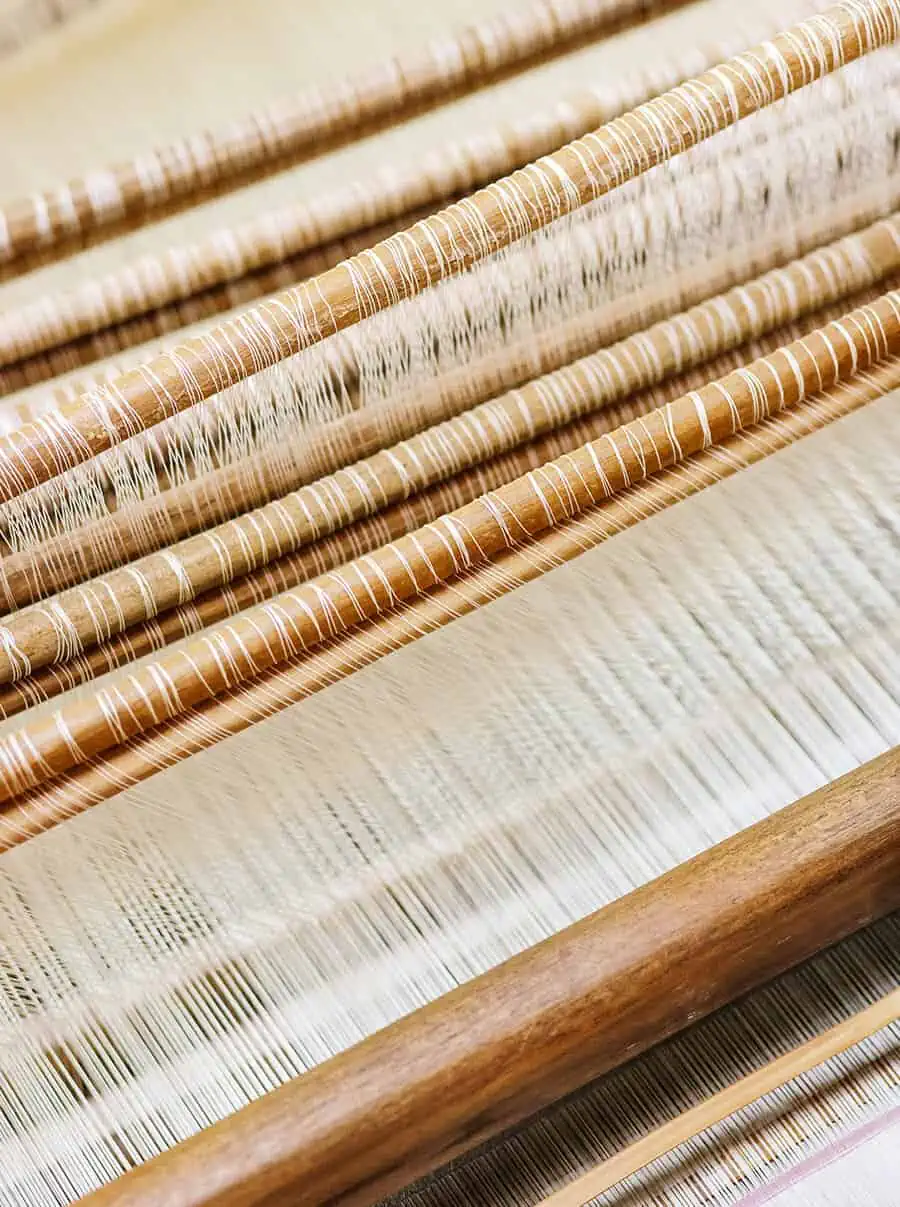
There are two useful visits. The central workshop near the Old Market shows several crafts under one roof. The silk farm in Puok shows the earlier stages, from mulberry cultivation and silkworms to raw thread. For silk and lacquer, it remains the standard against which many newer operations are compared.
07. At Khmer Ceramics, Make the Object Yourself.
A class can be a better souvenir than a product bought from a shelf.
Khmer Ceramics & Fine Arts Centre was created to revive Khmer pottery and has built its workforce around practical inclusion. It is woman-owned, employs a majority of women and trains deaf and other disabled artisans as paid staff.
Book a wheel class if time allows. You make the piece, the center fires it and you either collect it or arrange delivery. The finished tableware is also worth buying because it is useful, well made and connected to older Khmer forms without looking like a replica. A bowl that enters normal life at home will last longer than almost any conventional souvenir.
08. Sombai and Theam's Gallery Cover Two Very Different Purchases.
One is a drinkable gift. The other is serious Cambodian art.
Sombai was founded in 2012 by Joëlle Jean-Louis and Lionel Maitrepierre around Cambodian infused rice spirit. The product is served through a tasting experience, and every bottle is hand-painted by a Cambodian artist and usually finished with a krama at the neck. The liquid gets consumed; the bottle remains. That is smart product design and a clear reason to buy at the workshop.
Theam's Gallery is for a different budget and intention. Lim Muy Theam runs his home, atelier and gallery as one space, with apprentices working in painting, sculpture, wood and lacquer. Buy here when you want contemporary Cambodian art from a named artist and a working studio, not an object designed mainly to pass as local.
Good design is what keeps a souvenir in your home after the trip is forgotten.
09. Satcha Is Building the Next Group of Makers.
The campus is both a workshop and a business incubator.
Satcha opened to the public in December 2022 and was formally inaugurated in March 2023 as Cambodia's first handicraft incubation center. Its bamboo campus houses artisans working across 15 crafts and is free to visit.

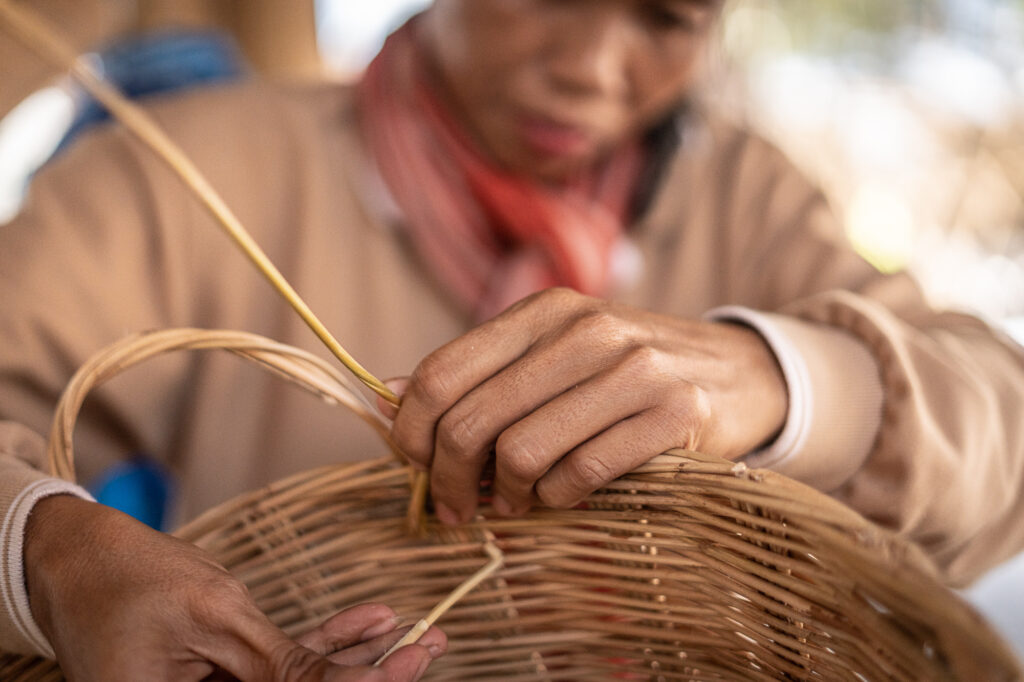

The operating model is the reason to go. Selected artisans receive a workshop, tools, materials, training and commercial support for two to three years, with the goal of eventually running independent businesses. Buying there supports the current product, but also the creation of the next Cambodian brand.
10. Buy the Chain, Not the Label.
The best purchase is one that can answer basic questions about where the money goes.
A mass souvenir is anonymous because anonymity keeps the cost low. The alternative is not expensive design for its own sake. It is a product with traceable origin, a named maker and a Cambodian business collecting more than a manufacturing wage.
SATU gives you the overview. Made in Cambodia Market applies a local-production rule. Senteurs, Artisans Angkor, Khmer Ceramics, Sombai, Theam's and Satcha let you get closer to production. Decide whether you want something to drink, wear, use, display or give, then choose the place built around that category.
Siem Reap sells plenty of interchangeable keepsakes. The objects worth carrying home are the ones that could not have come from anywhere else.
Sources
- SATU Concept Store: Riverside multi-brand store; opening date, brand count, hours, and buying philosophy.
- SATU, Shopping in Siem Reap: Location between the Royal Residence and FCC Angkor by Avani, product categories.
- Made in Cambodia Market, Cambo Tours: King's Road location, hours, mission, vendor roster.
- Made in Cambodia Market, The Better Cambodia: "Help Create Khmer Jobs" mission and community-market framing.
- Senteurs d'Angkor: Founded 1999, supporting Cambodian handicraft; workshop and garden.
- Senteurs d'Angkor, The Workshop: Stations, guided tours, tropical garden.
- Artisans Angkor: Craft disciplines and visitor sites.
- Artisans Angkor, Wikipedia: 1992 training origin, 1993 silk farm, workshop network.
- Khmer Ceramics & Fine Arts Centre: Pottery revival, classes, woman-owned workforce and social mission.
- Sombai: Founding, infused rice spirit, hand-painted bottles.
- Sombai, Wikipedia: Founders Joëlle Jean-Louis and Lionel Maitrepierre, 2012, sraa tram inspiration.
- Theam's Gallery: Lim Muy Theam's home, atelier and gallery; hours and apprentices.
- Satcha, Cambodian Handicrafts Incubation Center: Incubation model, bamboo campus, free daily entry.
- Satcha inauguration, Phnom Penh Post: 2022 opening and 2023 ministerial inauguration.
- Kandal Village guide, LUXE City Guides: Hap Guan Street shopping district context.