

Siem Reap Is Not Just a Temple Town
Angkor gets people here. The workshops, stores, hotels and restaurants are what make the city worth understanding.
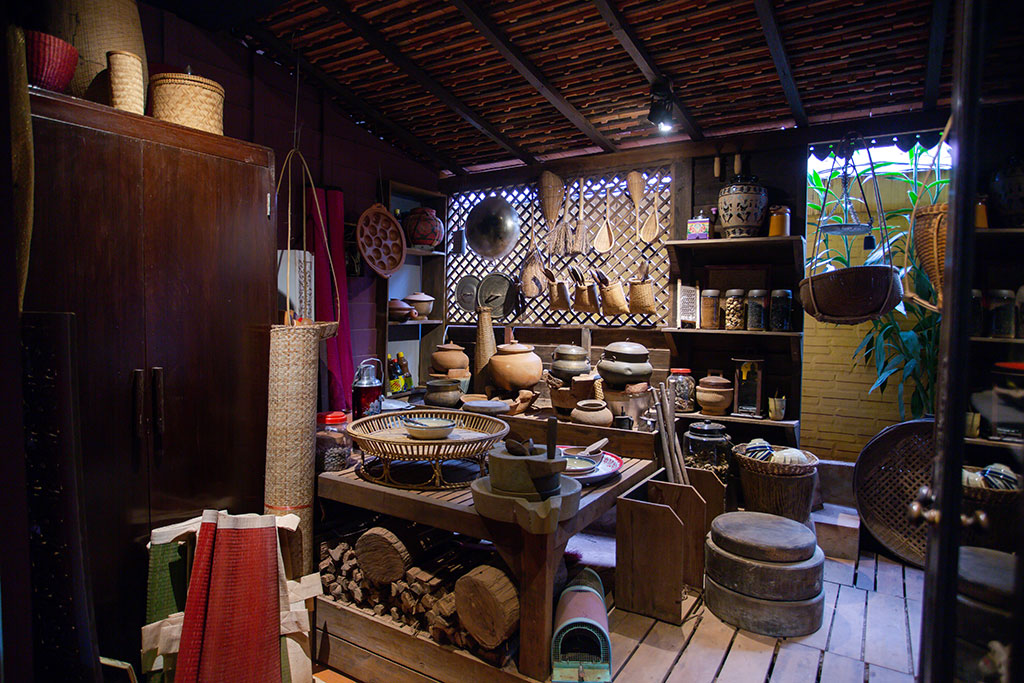
01. Most Visitors Leave Before They See the City.
Two nights, one sunrise and a flight out is the standard Siem Reap itinerary. It is also why most people misunderstand the place.
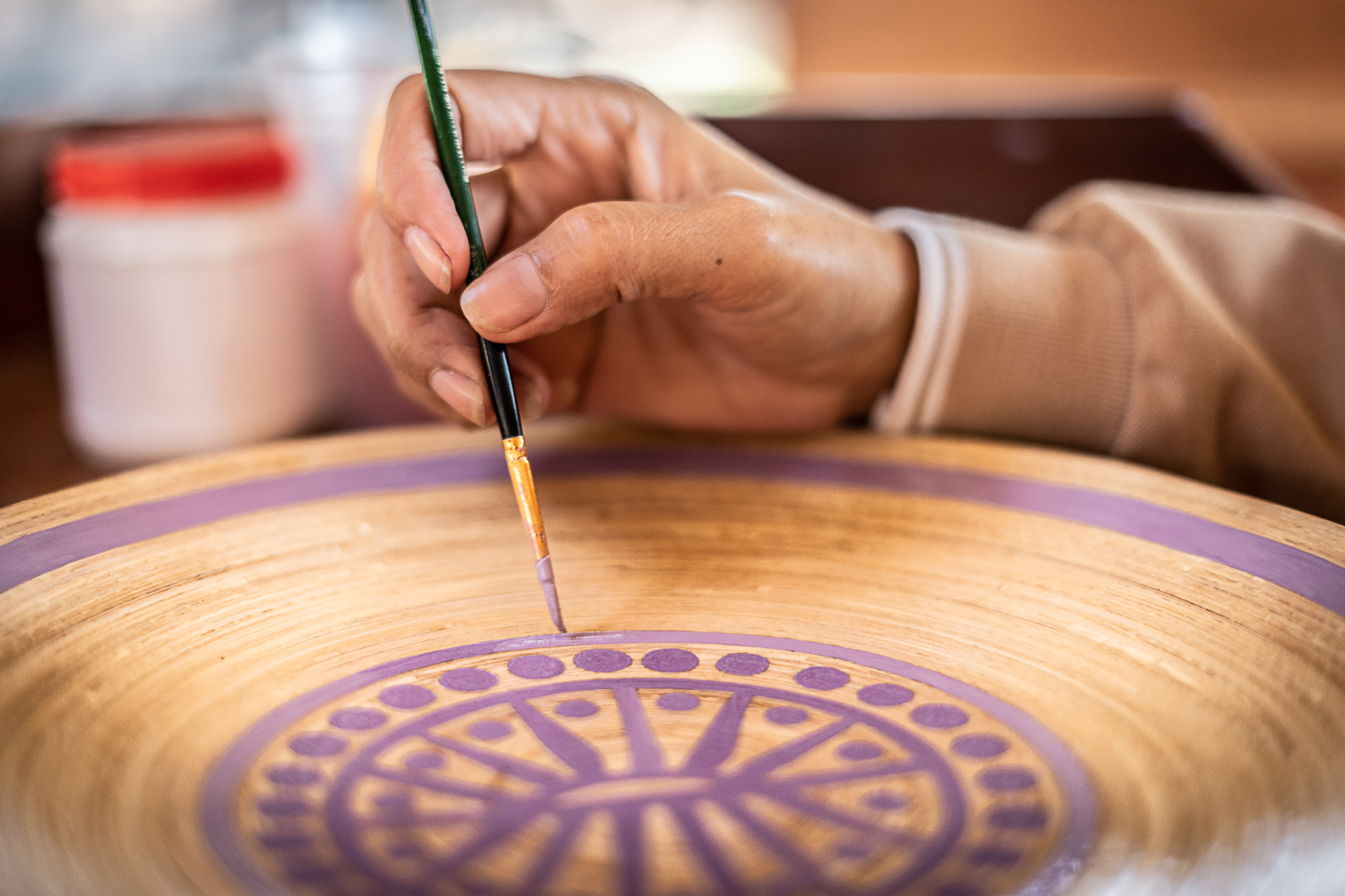
Most visitors arrive with one image already loaded: Angkor Wat at dawn. They see the temples, eat around Pub Street and leave. The trip works, but the city barely enters it. Siem Reap gets treated as the hotel lobby for Angkor rather than as a place with its own creative economy.
I moved here in 2026 to build something, and that standard reading fell apart quickly. Within a few square kilometers there are working studios, serious concept stores, design-led hotels, ambitious restaurants and one of Southeast Asia's longest-running photography festivals. None of it is separate from Khmer culture. It is what Khmer culture looks like when people are making, selling and training now.
Angkor gets the booking. Siem Reap earns the extra days.
Angkor is not overrated and does not need defending. It is one of the most important archaeological sites in the world. The missed part is simpler: the town beside it has become a design destination in its own right, while most travel coverage still treats it as a stopover.
02. Angkor Created the Audience.
The scale of the temples explains the scale of the opportunity around them.

Angkor entered the UNESCO World Heritage List in 1992. From January through June 2025, the archaeological park received 567,673 foreign visitors and generated about $26.3 million in ticket sales, up roughly 8 percent year over year. By the end of October, more than 765,000 international visitors had bought passes. Every independent hotel, restaurant, shop and workshop in Siem Reap operates under that commercial gravity.
The temples bring people with time, money and curiosity. The city has to decide what happens after sunrise. A generic hotel room, a mass-produced souvenir and another tourist menu waste that demand. A Cambodian-made object, a restaurant with an actual point of view or a hotel that commissions local artists turns it into a longer stay and a better local business.
My practical advice is simple. See Angkor early, when the weather is better and the crowds are lighter. Then give the rest of the day to Siem Reap. The temples should anchor the itinerary, not consume it.
Angkor built the traffic. The city is learning how to keep more of its value.
03. The Design District Is Small Enough to Use.
You do not need a car or a week. Most of the useful stops are a walk or a short tuk-tuk ride apart.
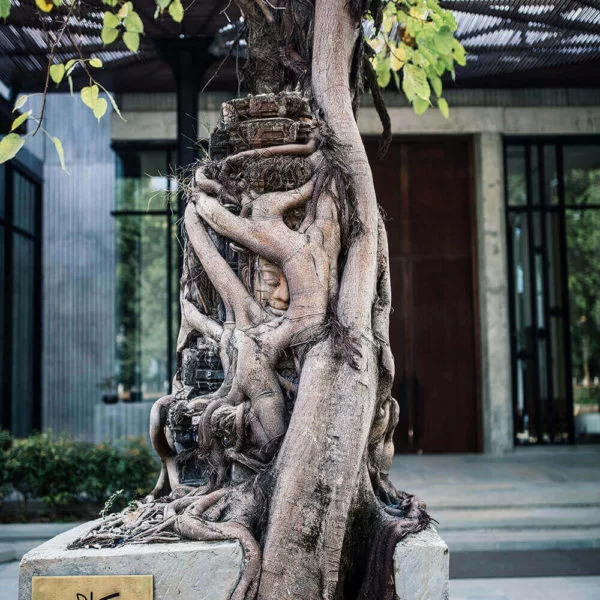
Siem Reap's advantage is density. Good independent businesses sit close enough together that one visit feeds the next. A workshop can lead to a concept store, then a gallery, then dinner in a hotel that owns Cambodian art. That proximity makes the city easy to understand and easy to spend time in.
Start with SATU on the riverside, between the Royal Residence and FCC Angkor by Avani. The store opened in March 2022 and now carries more than 70 Cambodian brands across fashion, jewelry, candles, pepper, books and homeware. Everything is sourced locally. For someone with one hour, it is the fastest way to see what contemporary Cambodian retail looks like without sorting through a market stall by stall.
Then go to Theam's Gallery, about 10 minutes from the temples. Lim Muy Theam turned his home, studio and gallery into one complete environment built around lacquer, sculpture, painting and reworked Khmer forms. It is open daily from 8am to 5pm. You see the work in the place where it is developed, which is a far better introduction than seeing a finished object without the maker behind it.
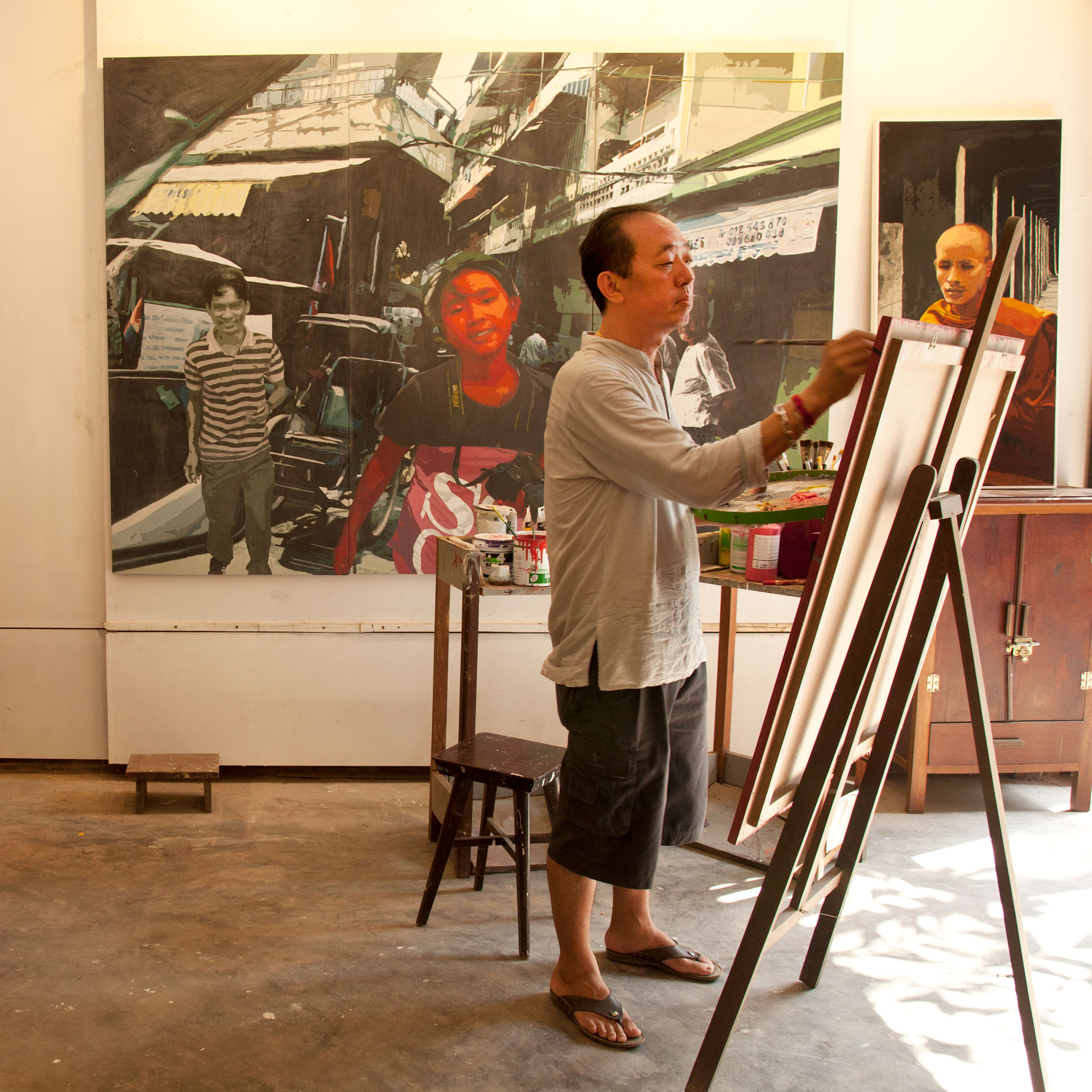
That connection matters to me because it is how we build our own brands. The product is only one part of the value. The person, the process, the room and the way the object reaches the customer all matter. Siem Reap lets you see that chain unusually clearly.
04. Craft Here Is a Business, Not a Display.
The best shops in Siem Reap can tell you who made the product, where and how.
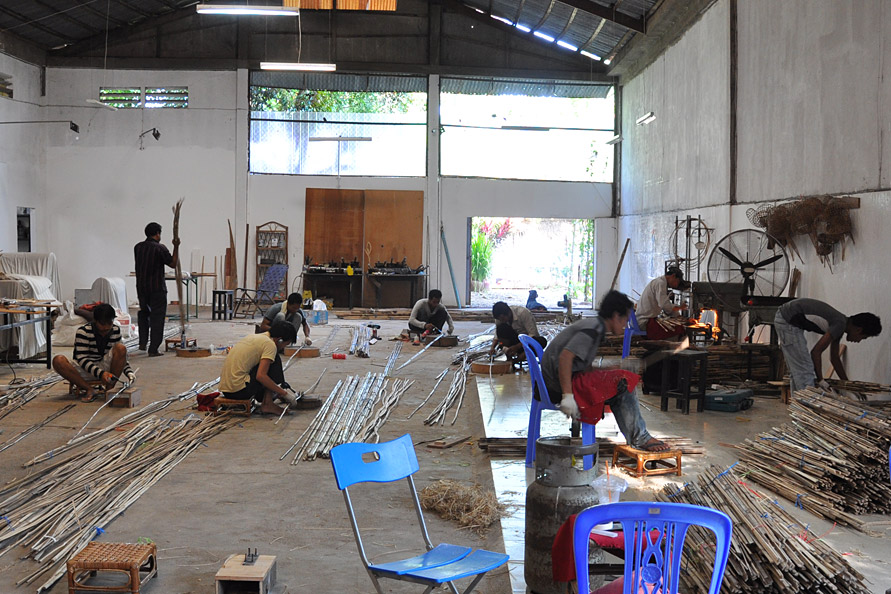
The word souvenir is too broad to be useful. It puts a mass-produced elephant key ring in the same category as a hand-thrown bowl or a piece of locally woven silk. Siem Reap makes the difference visible because many of the serious workshops are open to visitors and sell directly from the source.
Artisans Angkor is the obvious starting point. It grew out of a vocational program created in 1992 to train and employ young Cambodians from rural areas. Today it works across stone and wood carving, lacquer, silk and silver. The main workshop is close to the Old Market, and the Angkor Silk Farm in Puok shows the earlier stages of the process. You can watch the thread become the scarf before you buy it.
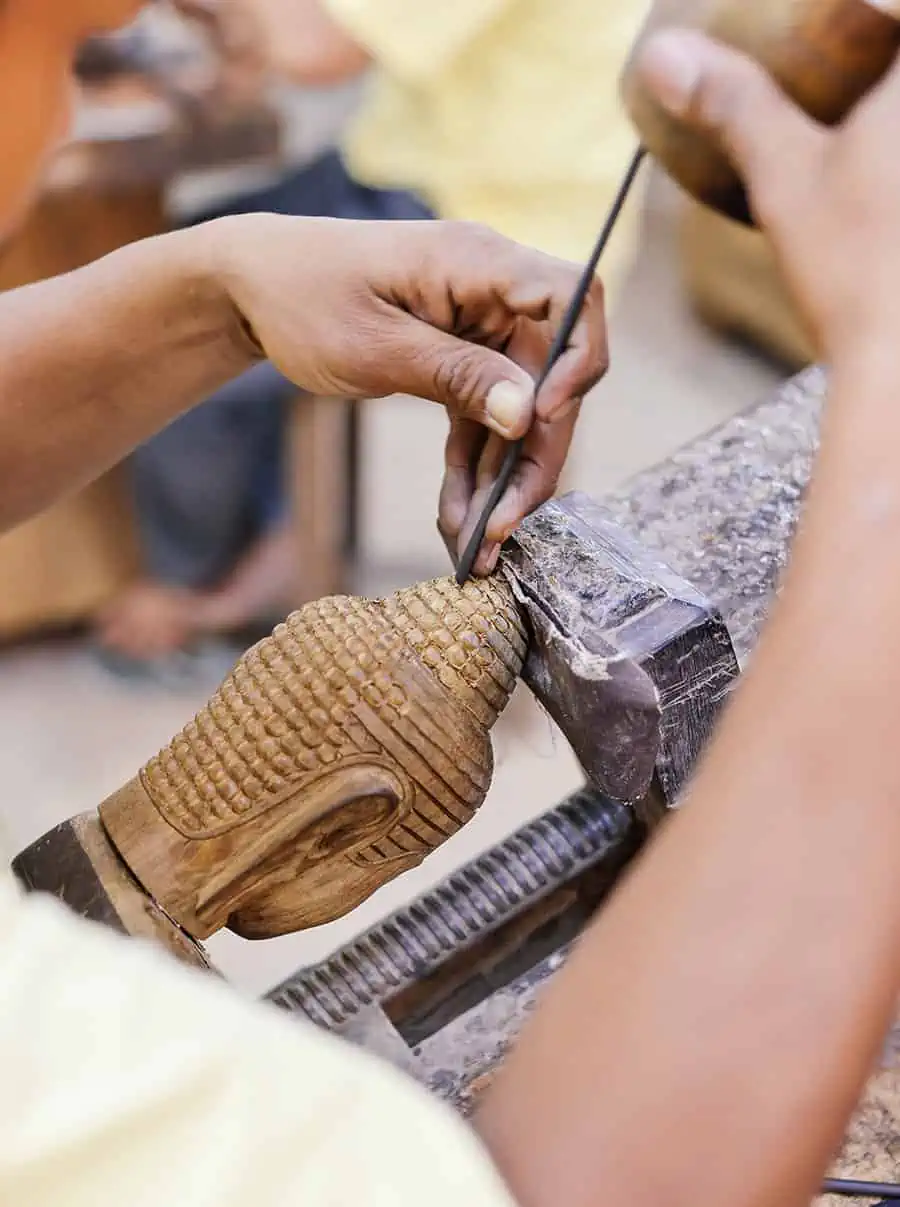
Khmer Ceramics & Fine Arts Centre takes a different route. Founded in 2006 to revive Khmer pottery, it is woman-owned, employs a majority of women and has built a large part of its workforce around deaf artisans. The center's deaf instructors teach the wheel classes because pottery is demonstrated with hands. It is a practical operating model, not a charity slogan.
Here, provenance is not copywriting. It is the reason to buy.
Cambodia has spent decades manufacturing for other people's labels. These workshops show the next step: local skill attached to a local name, a local retail channel and a higher share of the value. That is why a bowl or a scarf matters beyond the object itself.
05. The Shops Sit on Top of Real Institutions.
A retail strip can be manufactured quickly. A creative community takes years.
Siem Reap has the institutions to prove this is more than a collection of attractive stores. The city has trained photographers, circus performers, artisans and hospitality workers for years, often through organizations that combine public programming with paid work.
The Angkor Photo Festival & Workshops started in 2005 and is the oldest established international photography event in Southeast Asia. Its exhibitions and projection nights are public, while its workshops provide tuition-free professional training to emerging Asian photographers. The 21st edition ran from late January into February 2026. Twenty-one editions is enough history to call it an institution.
Phare adds the performance side. Its roots go back to 1994, when nine young men returning from a refugee camp helped create Phare Ponleu Selpak in Battambang. The Siem Reap circus opened in 2013. Almost 75 percent of profit goes back into the school and into jobs for graduates. A ticket is entertainment, but it is also funding for the next class of Cambodian performers.
Put those institutions beside the workshops, shops and restaurants and the commercial picture is clear. Siem Reap does not only sell culture to visitors. It trains people to produce it and gives some of them a route to market.
06. One Useful Day Beyond Angkor.
Start with SATU, visit a working studio, eat somewhere that takes Khmer food seriously and finish at Phare.
| Place | Why it matters | How to find it |
|---|---|---|
| SATU | Riverside concept store carrying 70-plus Cambodian brands. The fastest way to read contemporary Cambodian retail in one room. | Riverside between the Royal Residence and FCC Angkor by Avani. Open daily, roughly 9am to 7pm, Sun from 10am. |
| Theam's Gallery | The home, atelier, and gallery of artist Lim Muy Theam. A built world of lacquer and sculpture, not a gift shop. | Road 30, Kokchak, about ten minutes from Angkor. Open daily 8am to 5pm. |
| Artisans Angkor | Craft-revival social enterprise. Carving, lacquer, silk, and silver made in public. | Main workshop off Stung Thmey Street near the Old Market. Silk Farm in Puok district. |
| Khmer Ceramics & Fine Arts Centre | Woman-owned pottery centre with deaf teachers running hands-on wheel classes. Craft plus real inclusion. | On the road toward the airport. Two-hour classes bookable daily. |
| Angkor Photo Festival & Workshops | Southeast Asia's oldest international photography event, running since 2005. Proof of a real scene. | Based in Siem Reap, main program late January into February. Check current dates before travel. |
| Phare, The Cambodian Circus | Nightly performance funding an arts school in Battambang. Culture with a mechanism. | Purpose-built big top off Sok San Road. Evening shows. |
07. Why This Matters Now.
Siem Reap already operates like a design destination. The travel market has not caught up.
That timing is what interests me. The workshops are open, the brands are improving, the restaurants are getting more ambitious and the institutions have years behind them. But the default description of the city is still temple, sunrise, checkout. The gap between the reality and the way the city is marketed is large.
That gap should be used, not complained about. Cover the city through the people building it. Name the potter, the silk farm, the photographer, the chef and the brands on the shelf. The more specific the coverage becomes, the less Siem Reap looks like an accessory to Angkor and the more it looks like the creative city it already is.
Come for Angkor. Just do not leave before you see what the city is building around it.
The temples will still be there tomorrow morning. The businesses being built underneath them are younger, less obvious and changing much faster. That is the part I am paying attention to, and the reason I chose to build here.
Sources
- SATU concept store, Siem Reap shop page: 70-plus Cambodian brands, riverside location, daily hours.
- SATU home page: store positioning and 2022 opening context.
- UNESCO World Heritage Centre: Angkor: 1992 inscription and site significance.
- Travel And Tour World: Angkor early 2025 visitor numbers: Jan-June 2025 arrivals and revenue.
- Theam's Gallery official site: home, atelier, gallery of Lim Muy Theam; daily 8am-5pm.
- Artisans Angkor official site: craft disciplines and workshop visits.
- Artisans Angkor, Wikipedia: origin in the CEFP training project and company founding.
- Khmer Ceramics & Fine Arts Centre: pottery classes and centre profile.
- Wander-Lush: Khmer Ceramics pottery class review: 2006 founding, women employees, deaf teaching staff.
- Angkor Photo Festival & Workshops, About: launched 2005, Southeast Asia's oldest established photo event.
- Angkor Photo Festival 21st edition, 2026 participants: confirms the festival is active in 2026.
- Phare Performing Social Enterprise: The Cambodian Circus: 1994 origins, 2013 Siem Reap opening, profit model.